
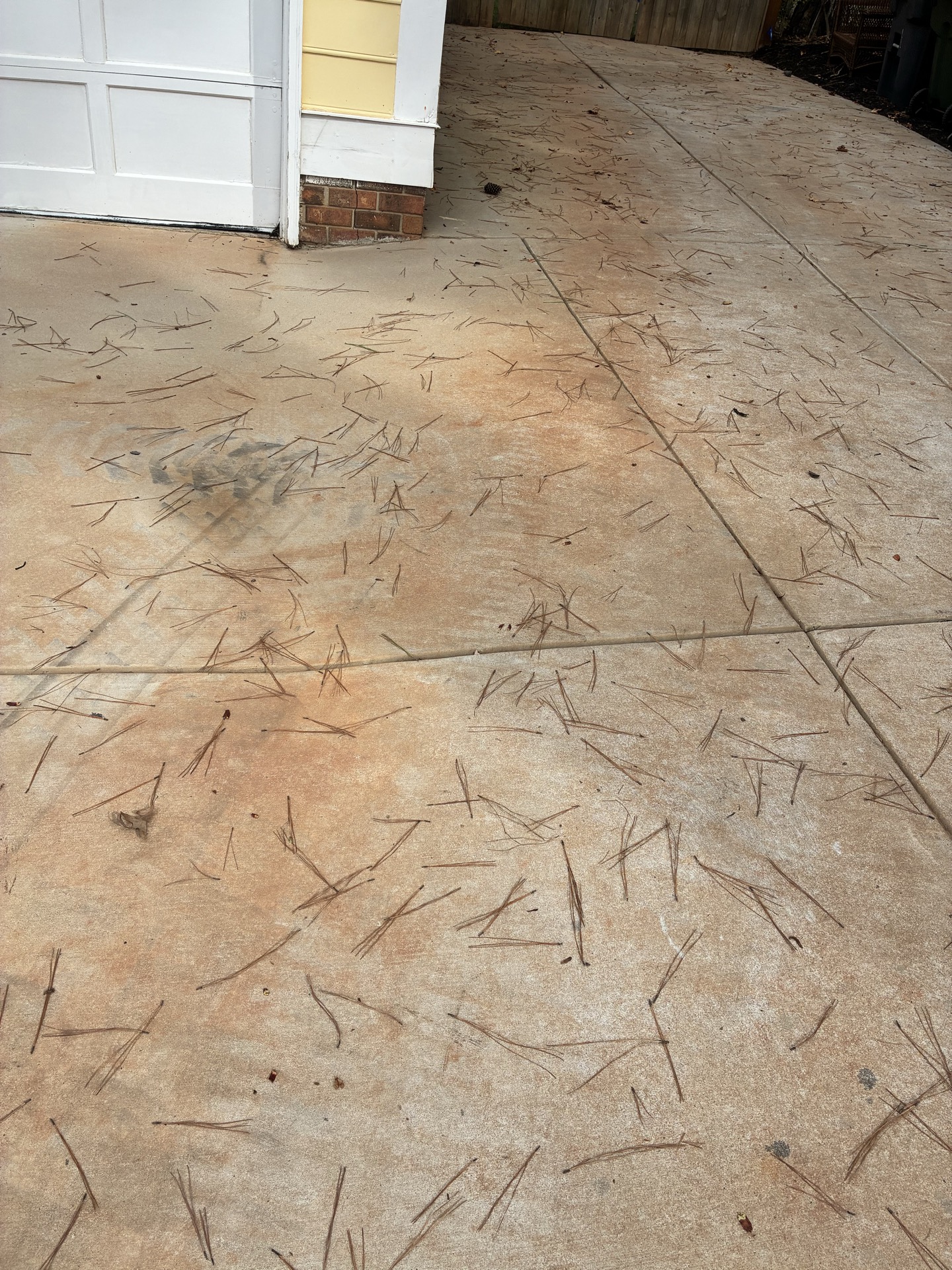
If you live in Lexington, Irmo, Chapin or anywhere else in the Midlands, you know the color. Red clay washes out of the yard in a hard rain, rides in on tires and shoes, and settles into the driveway, the sidewalk and the front steps. Then fall arrives, the oaks drop their leaves, and concrete that looked fine in July is covered in orange streaks and brown leaf prints by Thanksgiving.
After more than 30 years of cleaning driveways and walkways around Columbia and Lake Murray, we hear the same question every season: is that stain permanent? Usually it is not. But the answer depends on what the stain actually is, how long it has been there, and how it gets cleaned. Here is what we have learned.
The short answer
Most red clay stains lift completely or lighten a great deal with professional concrete cleaning. Fresh clay often comes up on the first pass. Clay that has been baking into the surface for years may not disappear entirely, and an honest company will tell you that before the work starts, not after. The same goes for leaf stains and rust. The key is matching the method to the stain and the surface instead of just turning up the pressure.
Know what you are looking at
Concrete is porous. It soaks up water, and whatever is in that water comes along for the ride. That is why the same driveway can have four or five different kinds of stains, each with its own cause.
Red clay
Midlands clay gets its color from iron, and once it works into the surface it can look a lot like rust. It tends to collect where runoff crosses the driveway, along the edges next to beds and lawn, and in tire tracks after a muddy week.
Leaf prints
Wet leaves release natural tannins as they sit. Leave a pile on the driveway through a rainy week and you get brown silhouettes of every leaf, sometimes as crisp as a stencil. They are common on patios and walkways under big trees.
Rust from irrigation
Orange spray patterns along the edge of a driveway or sidewalk usually come from irrigation water with a lot of iron in it. They come back every time the sprinklers run, so it helps to know the source before cleaning.
Algae and mildew in shady spots
Shaded concrete stays damp longer, so clay, leaf stains and green or black growth tend to show up together on north-facing walks and under trees. Those spots are slippery as well as ugly, which matters on front steps.
Oil and vehicle drips
Dark spots where the car parks are a different kind of stain altogether. Our pressure washing service is built for heavy stains like oil, rust and grime, and like clay, older drips may lighten rather than vanish.
It is rarely just the driveway
Stains travel. Clay that lands on the driveway gets tracked onto the front walk, the steps and the back patio, and leaves do not stop at the property line of your concrete. When we clean, we look at the whole path a guest takes from the car to the front door.
That matters for the finished look. A freshly cleaned driveway next to a stained sidewalk makes the sidewalk look worse than it did before. Cleaning the driveway, walkways, steps and patio together gives you an even, consistent result. The same is true for businesses, where the entrance and the sidewalk out front are the first thing a customer sees.
Before you reach for the acid
We understand the urge to fix it on a Saturday. Some of the most common DIY approaches cause more trouble than the stain did:
- A hose and a stiff broom move surface dirt around but rarely touch what has soaked in.
- Harsh store-bought acids, used the wrong way, can etch concrete and leave a blotchy, lighter patch that stands out more than the stain.
- A rented high-pressure washer held too close in one spot can leave stripes, wand marks and damage at the expansion joints.
- Bleach and household cleaners can discolor concrete and harm the grass and beds next to it.
Our post on concrete cleaning in Lexington explains why uneven cleaning shows up as lines across a driveway, and why the right equipment matters as much as the right effort.
How our crew handles a stained driveway
- We look first. Before any water hits the concrete, we identify what is on it: clay, leaf tannins, rust, growth, oil, or a mix.
- We pick the method for the surface. Driveways and sidewalks are hard surfaces, so they usually call for pressure washing with professional surface cleaning tools that spread the pressure evenly and avoid lines. Nearby brick, painted trim and siding get a gentler approach. Our guide to soft washing vs pressure washing explains when each one fits.
- We treat the problem spots. Set-in clay and rust stains get extra attention rather than more brute force.
- We rinse and review the results. Some stains lift on the first pass, and older ones may lighten without vanishing. We will tell you honestly which is which, and every job is backed by our guaranteed results.
Want to see what that looks like on real Midlands concrete? Take a look at our work page for before and after photos from local homes and businesses.
Keeping it clean through fall and winter
A clean driveway stays clean longer if you give it a little help. Clear leaves off the concrete before they sit wet for days, especially under oaks and maples. Rinse fresh clay off after a heavy rain, before it dries into the surface. Point sprinkler heads away from the driveway if you see rust patterns forming. And keep an eye on shaded walkways, where growth makes stains slick as well as ugly.
Timing helps too. Many homeowners schedule a cleaning in late fall so the driveway looks cared for when holiday guests pull in, and then again in spring after pollen season.
FAQ
Can red clay be removed from concrete? Usually, yes. Most red clay stains lift or lighten a great deal with professional concrete cleaning. Very old stains may not disappear completely.
Will pressure washing alone remove it? Sometimes. Fresh clay often comes up with pressure washing. Set-in stains may need more than one pass or a different approach.
Does cleaning damage concrete? Not when it is done with the right pressure and equipment. Damage usually comes from too much pressure in one spot or harsh acids.
How often should a driveway be cleaned? Many Midlands homeowners clean once or twice a year, often in spring and again in fall.
Ready to see what is under the red?
Crystal Clear Solutions has been cleaning homes and businesses across Richland and Lexington Counties for more than three decades, from our office on Dreher Shoals Road in Irmo to Chapin, Lexington, Columbia and Lake Murray. We are fully insured, and we offer military, veteran, first responder and multi-service discounts.
Request your free concrete cleaning quote on our website. Click Free Quote at the top of any page, tell us which surfaces you want cleaned, such as the driveway, sidewalk, patio or front steps, and mention the stains you are dealing with. We will follow up with a clear quote.